「華人戴明學院」是戴明哲學的學習共同體 ,致力於淵博型智識系統的研究、推廣和運用。 The purpose of this blog is to advance the ideas and ideals of W. Edwards Deming.

2010年3月11日 星期四

台灣戴明圈 280-89

台灣戴明圈


(289)

时事风云 | 2010.03.15

美国展开大规模人口普查
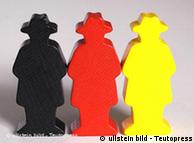
从本周一起,美国将开展大规模的人口普查。此项行动预计历时数月之久,估计该国3亿零8百万居民都将接受普查-其中也包括估计近1100百万在美国非法居 留的外国人。公益慈善组织和非政府组织将在今年的人口普查中扮演重要角色。这些组织愿为人口普查工作提供支持,因为他们认为,其关注弱势群体将从准确的人 口普查中获益最多。但与此同时,这些人很有可能不会主动填表。

所有想了解美国人口普查的音乐迷们都能无偿欣赏这支Pitbull歌曲。人们只需将这首歌曲从网上下载到手机上,并且参加人口普查问答即可。

发起这项运动的是加州一个名为"投票给拉丁裔"的非政府组织。由于少数民族以及社会边缘组织往往不参加人口普查,所以"投票给拉丁裔"非政府组织计划在加州启动广泛的宣传活动。凡是参加问答,用链接方式将问答转给亲朋友好的人都可无偿下载音乐。

" 投票给拉丁裔"组织的玛丽亚·特雷莎·库马尔(Maria Teresa Kumar)发现,四分之一的iPhone拥有者是拉美族裔,而且平均年龄非常年轻。恰恰是年轻人对长辈有着不小的影响.他们可以驱散长辈对人口普查的担 忧和偏见-尤其当人口普查涉及移民身份时.库马尔说: "人口普查可靠安全,它有助于帮助拉丁裔族群获得更多的政治分量。此外它还关系到很多钱的问题."

因为美国政府每每根据人口普查结果为教育、运输和基础设施分配数十亿美元经费。准确的人口结构统计至关重要。

所以,"投票给拉丁裔"组织与博客和各组织进行合作,他们负责以手机短信的方式传播信息。相关费用由诸多公益组织承担,其中包括开放社会研究所、福特基金会以及硅谷基金会等。

此外,"投票给拉丁裔"组织也从伊斯诺斯州的乔伊斯基金会那里获得资金。该公益组织负责人艾伦·阿尔贝尔丁(Ellen Alberding)表示。其所在组织已为"将我计算在内"运动出资一百多万美元:"即将启动的人口普查将对与基金会合作的居民产生很大影响。"

密歇根公益组织的凯尔·考德威尔(Kyle Caldwell )坚信:"认为人们会在人口普查前两三个月聘用一名人口普查员,派他沿街走巷寻找无家可归的流浪汉就未免过于天真了。公益基金会比政府更接近社会边缘组织,因为他们与这些人保持联系-比如与无家可归者等。"

考德威尔所在组织为此次人口普查出资13万欧元。经济困难地区尤其亟需国家的财政支持。比如密歇根州,因为那儿有很多居民在房地产危机中失去了自己的住所:"原来的地址如今已经作废。因为危机的受害者现在已住在其它地方,所以必须找到他们。"

公益组织对地方和联邦层面政府提供支持。因为资金短缺。今年加州仅出资2百万美元。2000年上一次人口普查时,加州还出资2千5百万美元。穷则思变。在危机期间,公益慈善组织也将从贫穷居民族群的准确统计数字中获益。

作者:Jan Tussing/祝红

责编:乐然


(288)

丰田遭遇至少 89起集体诉讼

http://www.sina.com.cn 2010年03月11日 07:14 北京晨报

  索赔或逾卅亿美元

  美联社9日发布一项调查,美国消费者对丰田提起至少89起集体诉讼,索赔金额可能超过30亿美元。这些诉讼涉及购车者因特定车型“贬值”所蒙受 的经济损失等。分析师估算,丰田因大规模召回所涉及的一系列损失将以数十亿美元计。

  缘跌价

  美联社调查美国联邦法院文件后发现,以大规模召回事件导致丰田汽车价值下跌、给先前购车者造成经济损失为起因,全美范围对丰田提起的集体诉讼数 量截至本月8日为89起。

  这些诉讼涉及购车者因自己的车辆在二手车市场上价格下跌所受损失,而不包括关联因为车辆缺陷而丧生或受伤的赔偿金、丰田股票市场价格下跌给持股 人带来的经济损失等。

  一些原告在起诉材料里援引美国最大汽车价格评估企业“凯利蓝皮书”本月发布的数据:二手车市场上,经过召回检修的丰田汽车平均销售价格下调 3.5%,如“卡罗拉”(Corolla)单价下跌300美元,“红杉”(Sequoia)单价下跌750美元。

  购车者认为,丰田先前知晓产品存在安全隐患,但在较长时间内选择隐瞒信息,以致他们蒙受损失。

  佛罗里达州迈阿密市购车者杰里·博尔邦眼下寻求提起集体诉讼。他说,妻子怀有8个月身孕,不敢再驾驶先前购买的“普锐斯”;无奈这款车“恶名在 外”,难以卖掉,“我们摆脱不了它”。

  “更可怕”

  美国东北大学法学教授蒂姆·霍华德参与了针对丰田的集体诉讼。他说,原告人数可能为600万。如果按每人最终获赔500美元计算,总额为30亿 美元,而这一赔偿额为保守估计。

  美国宾夕法尼亚大学法学教授汤姆·贝克说,对丰田而言,集体诉讼“比那些涉及人员受伤的案件更可怕”。后者可能获判一笔2000万美元赔偿金, 而前者“却可能涉及数以百万计购车者,每人获赔1000美元”。

  “如果我是丰田,会更忧心那些(集体诉讼)案件。”他说。

  分析师认为,可以预见,集体诉讼牵涉数十亿美元计赔偿金,而涉及人员伤亡的每起案件赔偿额以数百万美元计,再加召回检修等措施所需资金投入,丰 田这次将损失至少几十亿美元。


(287)
戴久永老師引述 解釋 Dr. Deming的

什麼是新經濟觀?
1
傳統經濟觀

  我們都在競爭的氣氛中成長,不論是人與人或者團隊、部門、學生、中學、大學之間,都充斥著競爭。經濟學家教導我們,競爭會解決我們的問題。事實上,我們現在了解,競爭具有破壞性。

2新經濟觀
  更好的作法是,每個人都能以「人人皆贏」為目標,如同一個系統而共同工作。我們所需要的是合作以及向新的管理方式轉型。


(286)

宏遠紡織停工三天 外勞暫時安置附近學校

(宏遠興業是台灣知名的紡織公司及一貫製造廠,同時也是Nike, Adidas, Patagonia, the North Face, Clumbia, Spyder 等知名國際品牌的布料供應商。)
  • 2010-03-05
  • 【中廣新聞/龐清廉】

台南縣宏遠紡織廠大火,燒了近20小時,損失上億元,上午仍有消防人員在火場進行殘火處理。廠方表示,火災雖然燒毀了倉儲大樓、研發中心和部分宿舍,但並未損及生產線,工廠預計三天後恢復生產,至於,近三百名外勞,這兩天將暫時安置在國小活動中心和山上鄉公所。

位於台南縣山上鄉的宏遠紡織廠,四日上午八點半,也就是在甲仙大地震後,發生火警,猛烈的火舌和濃煙直竄天際,不僅燒毀了佔地千坪高六層樓 的倉儲大樓,還延燒到研發大樓,以及員工宿舍,由於火場範圍相當大,大火燒了近20個小時才撲滅,一直到上午還是可以看到火場在冒煙,並有許多消防人員在 場進行殘火處理。

宏遠紡織廠副總向文桂表示,大火燒毀了二棟廠房和部份宿舍,但慶幸的是生產設備並沒有受到波及和影響,由於顧慮員工安全,加上廠區必需花時間整理,因此將暫時停工,預計三天後復工。至於,工廠裡面近三百名外勞,則先安置到山上國小活動中心以及山上鄉公所。

宏遠紡織廠大火,損失金額初估至少上億元,廠方雖然有保火險,但卻沒有保地震險,如果大火是由地震所引起,恐怕無法獲得理賠,因此,對於起火原因,廠方態度十分保守和低調,只強調會交由消防鑑識單位,進一步確定起火原因。


(285)
Dear Mr. Hanching Chung,

I stand corrected. My memory said it was Oxford where Dr. Deming went to study under Sir Ronald Fisher but my memory is sometimes faulty. Fisher also spent some time on the staff at Iowa State University in Ames, Iowa, USA. I was in a small conference room there once and there stood in the corner a device that looked like a treadle sewing machine. I lifted the lid and under a glass plate was a bunch of mechanical gears. A faded, yellowed note card in the corner said it was an early calculator that Sir Ronald Fisher insisted that the University buy for him. ...


Louis E. Schultz

Process Management LLC


****
Dear Lou,

Thanks for your kind background.
First, "How I knew/traced your article?"
The answers is very simple. I use Google's key word "Deming" for articles. It automatically feed me your article to my Gmail.

My name sees familliar?
I think I help your " Profiles ..." to be published in Taiwan in Chinese. I remember you send one of your friends who in teaching job in Taiwan to visit me. We went to the publisher for copies of your book.

Some words for myself. I got a Msc from U.K., I worked for 16 years for some USA Multi-National Companies. From 1995 I translated and published about 12 books of Dr. Deming and his students. My annual Deming Memorial Speechesand its related books are still functioning. In 2008, Bill Scherkenbach was in Taiwan, so he was the keynote speaker. In 2009, I published two books forworded by David Kerridge (for The Essential Deming) and J-M Gogue. This year the theme is about Systems and Variations and will foreworded by Bill.

For each book, I wrote about 250 pages and with about 100 pages for the conference materials.

Yesterday I guessed why you think Fisher was an Oxford Don? My possible explanation was Fisher's books were published by Oxford University Press. in 1970s, OUP published a collection of Fisher's three books.

I ocasionally do some consulting to earn some money to support my activities in Taipei.

Nice to have a chance to talk with you in email.


Best wishes,

HC


(284)
錦坤兄的胡適紀念館明信片

道德經: 天下皆謂我道大,似不肖。夫唯大,故似不肖。若肖久矣。其細也夫!我有三寶,持而保之。一曰慈,二曰儉,三曰不敢為天下先。慈故能勇;儉故能廣;不敢為天下先,故能成器長。今舍慈且勇;舍儉且廣;舍後且先;死矣!夫慈以戰則勝,以守則固。天將救之,以慈衛之。


(283)

恭禧 ch張華
(最新消息:
這本書星期日才上架(印4000本),昨天(星期三)
遠流即準備修改若干錯誤,印第二版,看來銷路不錯。)

可要出版社安排更上層樓之造勢
王榮文因毛傳被我記大過一次
這回給他一嘉許

(282)
吳老師
恭喜"生"教授 不過
一杯美味的Cointreau on ice 似乎太便宜啦

From Wikipedia, the free encyclopedia

Jump to: navigation, search
Cointreau
Liqueur cointreau.jpg


(281)

Dear Louis Schultz,

I like your article "Management must create ‘culture of quality’".
But I think "Oxford’s Fisher" is misleading. I copied some information for your reference:


Fisher, Sir Ronald Aylmer, 1890-1962, English statistician and geneticist, b. East Finchley, Middlesex, England; educated at Cambridge (1909-1915; Sc.D., 1926). From 1919 to 1933 he worked at the Rothamsted Experimental Station. He was professor of genetics at University College, London (1933-43) and at Cambridge (1943-57) and conducted research at the Commonwealth Scientific and Industrial Research Organization, Adelaide, Australia from 1957 until his death. He revolutionized inferential statistics, developing the concepts of analysis of variants and factorial experimentation. He wrote the classic Statistical Methods for Research Workers (1925) and Design of Experiments and Statistical Methods (1934). He also made extraordinary contributions to the field of genetics and statistically reconciled the principals of Mendelian inheritance with Darwin's notion of natural selection. He wrote the seminal work The Genetical Theory of Natural Selection (1930).


The Industrial Revolution brought the first interchangeable parts for machinery.

Once mass production began, it took manufacturing out of the hands of the individual craftsman and put it in the hands of large organizations. Those who led the organizations realized that assembly-line manufacturing was a process to be studied, and people with certain skills were required to study it.

At the same time, scholars such as Oxford’s Fisher were using statistics to study agricultural cycles. These techniques were soon adapted to the manufacturing process, which could be studied through numbers.

It was not until many years later that service organizations discovered their work was also a series of processes and the same statistical techniques would work for them.

Walter Shewhart was the first to devise a way to use numbers to examine processes; but others, such as W. Edwards Deming and Juran soon followed. All three worked during the 1920s at Western Electric’s Hawthorne Plant in Chicago, where the company sought to create new ways to make its equipment – at that time the most high-tech products in the world – more reliable.

The telephone was the space program of its day. In the decades after its invention, the telephone spawned a vast, broadening circle of new technology, requiring and creating a level of quality and dependability previously unknown in manufacturing.

Once the effort was initiated, however, it became clear that quality and reliability could be increased in almost any industry. Thus, the search for higher quality was launched.

No one casts so large a shadow across the quality movement as Deming. Often called the man who taught quality to the Japanese, Deming persisted throughout his career in going where few others dared – from an unchallenged mastery of statistics to a crusade for greater understanding of the new role of management.

It is in this focus on management that Deming differed from some of the other “gurus.” The popular quality movements such as Total Quality Control, Six Sigma, Lean, and Kaizen focus on the use of statistical techniques for process improvement, but Deming taught that these approaches alone were not sufficient.

Management must learn their new role and create a culture of quality throughout the organization for the effort to endure.

This gives us pause to look at what is currently happening at Toyota, once the epitome of quality. I have been told that Toyota has a key position of quality coordinator in each of their operations. This person is responsible for creating and maintaining a culture of quality throughout the facility.

My source said Toyota has grown so fast that they could not grow the coordinators fast enough, and for some reason they have never been able to grow them in America.

Other Japanese companies call this position company wide quality control manager. This position is often the stepping-stone to the top executive office and what better training than to become familiar with every key process in the organization.

An interesting observation is that typically in America the top executive has a background in finance or marketing and in Japan they typically have a background in engineering or quality.

Deming learned about statistics from exchanging ideas with Shewhart at regular meetings and from his study at Oxford under Fisher. He and Shewhart together learned about creating the proper culture and how to treat people from their study of Clarence Irving Lewis in his book, Mind and the World Order.

Lewis based his book on his study of the ancient philosophers.

Deming published several books on statistics early in his career but his seminal works are Out of the Crisis where he listed his 14 principles of management and The New Economics where he detailed his four elements of profound knowledge.

More on these will come later.

Louis Schultz, managing director of Process Management LLC, has assisted organizations worldwide with performance improvement. He currently assists area business owners as a SCORE counselor. E-mail him with questions or comments at lou@processman agement.com.

Tags: , ,


(280)

Outsiders to test Toyota's cars

THE ASAHI SHIMBUN

2010/03/04


photoJay Rockefeller, chairman of the U.S. Senate Committee on Commerce, Science and Transportation, at the hearing in Washington on Tuesday (TOSHIHIKO OGATA/ THE ASAHI SHIMBUN)

WASHINGTON--Toyota Motor Corp. said Tuesday it would ask an outside agency to examine whether there is any connection between a controversial electronic control system and complaints of sudden acceleration in its vehicles that led to the company's massive recalls.

Toyota executives told members of the U.S. Senate Committee on Commerce, Science and Transportation that they had asked Rodney Slater, secretary of transportation under President Bill Clinton, to serve on an advisory panel tasked with overseeing the external investigation into the system.

Toyota has already asked a scientific consulting firm, Exponent, to conduct tests on the electronic control system, but the new investigation will be initiated and supervised by the company's recently established Special Committee for Global Quality, which is headed by Toyota President Akio Toyoda.

Slater was transportation secretary when the U.S. subsidiary of Bridgestone Corp. conducted a major recall of tires.

Toyota officials have long insisted that there are no problems with the electronic control system, a point repeated by Toyoda when he appeared before a congressional hearing last Wednesday.

The move to bring in outside investigators appears to be in response to strong doubts raised about the system in two separate committees of the U.S. House of Representatives last week.

Yoshimi Inaba, president of Toyota Motor North America Inc., Toyota Executive Vice President Shinichi Sasaki and Executive Vice President Takeshi Uchiyamada attended the Senate committee hearing on Tuesday.

Uchiyamada, the vice president in charge of technology, moved to allay criticisms that the company was using a scarcity of vehicle analysis equipment to cover up defects in its vehicles.

Currently, there is only one data reading device in the United States capable of retrieving information from the event data recorders that are installed in all Toyota vehicles.

Uchiyamada said the company would distribute about 150 of the readers by the end of April.

The event data recorders are activated when air bags are inflated or when a driver presses hard on a vehicle's brakes. They record information on car speed, whether brakes have been applied and how the gas pedal was used from about five seconds before impact to about two seconds after the collision.

The information cannot be retrieved from the recorders without the special readers.

The Toyota executives were stung by criticism from Commerce, Science and Transportation Committee Chairman Jay Rockefeller. He expressed disappointment that Toyota was not presenting all of the answers to the many questions being raised about the safety of its vehicles.

Rockefeller, who studied in Japan and knew members of the founding Toyoda family, also suggested that laws to make brake override systems mandatory for all makers and vehicle were necessary.

Brake override systems give priority to the brake when both the gas pedal and brakes are applied at the same time.

The technology would enable drivers to stop vehicles in the event of the problems with sudden acceleration reported in some Toyota vehicles.

Toyota officials have already pledged to install a brake override system in all models manufactured worldwide.

2010年3月5日 星期五

W. Edwards Deming: The Story of a Truly Remarkable Person

McNary, Lisa Deane
[PDF]

W. Edwards Deming: The Story of a Truly Remarkable Person

- [ 翻譯此頁 ]檔案類型: PDF/Adobe Acrobat - 快速檢視
由 RB Austenfeld Jr 著作 - 1917 - 被引用 1 次 - 相關文章
It was Dean Lester who also encouraged Deming to go to Yale (New Haven, ...... Lisa McNary, one of Deming's last graduate students (began working with her in March 1992) ...... Deming: The Way We Knew Him. New York: St. Lucie Press. ...

博士論文

作者McNary, Lisa Deane

The University of New Mexico
書名The Deming management theory: A managerial leadership profile for the new economic age
稽核項163 p
附註Source: Dissertation Abstracts International, Volume: 54-05, Section: A, page: 1873

Co-Chairs: M. Jane Young; Kenneth Walters

Thesis (Ph.D.)--The University of New Mexico, 1993

A recent feature of organizational America which appears to be acquiring permanency is the concept of Quality Management, now considered the third stage of the Industrial Revolution. Although this concept was introduced by an American, Dr. W. Edwards Deming, over five decades ago, the Japanese became the forerunners in the global Quality Movement while American businesses remained complacent on the issue. Yet, in the last two decades, organizational America has experienced serious economic decline due to the diligent quality efforts of the Japanese, and American businesses have only recently entered the Quality Management arena, prompted primarily by the necessity to fight for their economic survival

A necessary element for success of the Quality Movement is management leadership in organizational America. Dr. Deming (1990b, 1993) has articulated a holistic theory of management called the "System of Profound Knowledge" which provides insight into the profile of a manager in the new economic age and its shaping of American society. Through a quantitative methodology, this study investigated the underlying principles of the "System of Profound Knowledge," to determine whether the managerial leadership properties of this theory represent a paradigm shift in current management leadership theory

The characteristics of a managerial leader which form the foundation of Dr. Deming's (1990b, 1993) "System of Profound Knowledge" were identified. From these characteristics, a profile inventory was developed, complete with a modified semantic differential interval rating scale which ranged from "0" to "10" with "10" representing the ideal from the "System of Profound Knowledge"

Individuals selected for this study were a random sample of 255 managers taken from the mailing lists of the American Society for Quality Control (ASQC) and the Academy of Management (AOM). A hierarchical cluster analysis using the squared Euclidean distance method was completed in order to determine if distinct groups existed. The data clustered into three groups, revealing distinct profile patterns for the three groups which were characterized as Deming managers, traditional (i.e., non-Deming) managers, and "not sure" managers. The inventory can be used as a management hiring or management development tool with further validation


2010年3月4日 星期四

Behind the Troubles at Toyota/ Toyota's Management Challenge

Behind the Troubles at Toyota

Feb 11, 2010

Correction Appended: February 24, 2010

What's wrong with Toyota?

Not much. At least not from an engineering, mechanical or even a quality point of view. You don't reach the top gear in the global auto industry unless you make outstanding cars, which Toyota does — most of the time. Though cars are familiar machines, they are also highly complex ones. To create a modern car, a company has to design, engineer, build, buy and then assemble some 10,000 parts. Sell 7.8 million cars, as Toyota did worldwide in 2009 — a horrible year for the industry — and there are billions of new parts with the potential to go kerflooey. Inevitably, some do.

What makes the recall since November of nearly 9 million Toyotas that are susceptible to uncontrolled acceleration and balky brakes such a shocking story is not so much the company's manufacture of some shoddy cars or even its dreadful crisis management — though those are errors that will cost it more than $2 billion in repairs and lost sales this year. It's something more pernicious: the vapor lock that seems to have seized Toyota's mythologized corporate culture and turned one of the most admired companies in the world into a bunch of flailing gearheads. Not only is Toyota producing more flawed cars than in the past, but an organization known for its unrivaled ability to suss out problems, fix them and turn them into advantages is looking clueless on all counts. (See the 50 worst cars of all time.)

Although the recalls seemed sudden, the evidence has been piling up. Literally. According to a report from Massachusetts-based Safety Research & Strategies (SRS), a consumer-advocacy group, there was a spike in the number of unintended-acceleration incidents in some Toyota vehicles in 2002, about the same time that Toyota introduced its electronic throttle control. The problem was initially blamed on a floor mat or vehicle trim that, if it came loose, could jam the accelerator pedal in an open-throttle position. That was followed by the first of several National Highway Traffic Safety Administration (NHTSA) investigations, in 2003, and two small recalls in 2005 and 2007. But accidents mounted, and last November the company had to take back nearly 3.8 million U.S. Vehicles — its biggest-ever recall — to address the problem.

Modifying the floor mats, though, didn't fix things. Toyota at first refused to believe that there was a mechanical problem with its pedals, blaming customers for improperly installing the floor mats. But by the time Toyota got around to a second recall, on Jan. 21, this one of 2.3 million vehicles, its reputation was in tatters. (See the top 10 product recalls.)

There was no place left to park the blame. The company backhandedly singled out a U.S. Partsmaker — CTS Corp., of Elkhart, Ind. — as the supplier of defective pedals while exonerating a Japanese company, Denso, that makes the same part. But CTS CEO Vinod M. Khilnani wasn't about to take the fall. He says his company met Toyota's engineering specifications and notes that the recalls tied to unintended acceleration extend to vehicles built as long ago as 2002. "CTS didn't become a Toyota supplier until 2005," he says.

There was more to come. In early February, Toyota managed to back over any remaining political goodwill it had when it voluntarily recalled more than 400,000 Prius and other hybrid cars — this time, to update software in the antilock brake system that could cause a glitch if the car traveled over a bumpy surface. The Lexus is Toyota's top-selling luxury model — bad enough — but the Prius is its darling, a car that demonstrated the company's ability to solve technical issues that kept other automakers from fielding gas-electric hybrids, at the same time clinching Toyota's green cred. Only last month at the Detroit Auto Show, executives described the Prius as the cornerstone of Toyota's future growth. Toyota planned to sell a million hybrids a year globally, most of them in North America.

As Toyota dithered, it lost hold of the wheel. Lawyers and politicians took charge. In Washington, Toyota executives are poised to replace bankers as populist targets before a congressional hearing. "Toyota drivers have gone from being customers of the company to being wards of the government," says Jim Cain, senior vice president of Quell Group, a marketing-communications firm in Detroit, and a former Ford media-relations executive. "It's absolutely the worst possible position to be in." Tort lawyers around the U.S. have filed class actions. SRS says it has identified 2,262 instances of unintended acceleration in Toyotas leading to at least 819 crashes and 26 deaths since 1999.

At Toyota dealerships, meanwhile, customers have had to haul their cars in to have the sticky gas pedals repaired. Loyal Toyota owners now have a reason to flirt with other brands, though switching could cost them: trade-in prices for Toyotas have fallen. And at global headquarters in Toyota City, Japan, corporate officers belatedly grasped the seriousness of the situation and tried to make amends. "I apologize from the bottom of my heart for all the concern that we have given to so many of our customers," a chastened Akio Toyoda, grandson of the corporation's legendary founder, Kiichiro Toyoda, told reporters in Nagoya, taking the requisite deep bow of the disgraced.

The Little Company That Could
So what happened? What went awry at the car company whose widely admired Toyota Production System (TPS) had made it the paragon of the art of manufacturing?


The reputation for quality that Toyota has damaged in just a few months took decades to build. Though Toyota was founded in the 1930s, its climb to global prominence started after World War II as the company became one of the exemplars of Japan's miracle — the creation of a successful, technologically advanced economy out of the ashes of war. In the 1950s, the company experimented with ways to manufacture cars more efficiently. Ironically, Japan's awful postwar poverty acted as a spur. The production techniques of American car companies — with heaps of stored components awaiting assembly, and ample machinery to do it — was just too wasteful and expensive for Japan. Toyota had to learn to do more with less. The result was TPS — or, more generically, lean manufacturing. Inventories were all but eliminated by employing just-in-time delivery techniques, in which suppliers brought components to the assembly line only when needed.

One organizing philosophy behind TPS is popularly ascribed to a concept called kaizen — Japanese for "continuous improvement." In practice, it's the idea of empowering those people closest to a work process so they can participate in designing and improving it, rather than, say, spending every shift merely whacking four bolts to secure the front seat as each car moves down the line. Continuous improvement constantly squeezes excess labor and material out of the manufacturing process: people and parts meet at the optimal moment. Kaizen is also about spreading what you've learned throughout the system. And then repeating it. It's the reason, for instance, that when Toyota assumed full control of the New United Motor Manufacturing plant in Fremont, Calif., which it had co-owned with GM, it got way more productivity and quality out of it than GM could with essentially the same workforce and equipment. (See the most exciting cars of 2010.)

Sakichi Toyoda developed another concept, jidoka, or "automation with a human touch." Think of it as built-in stress detection. At Toyota, that means work stops whenever and wherever a problem occurs. (Any employee can pull a cord to shut down the line if there is a problem.) That way, says Steven Spear of MIT, author of Chasing the Rabbit: How Market Leaders Outdistance the Competition and an expert in the dynamics of high-performance companies, "When I see something that's not perfect, I call it out, figure out what it is that I don't know and convert ignorance to knowledge."

That was the idea. But the fact that Toyota has produced so many imperfect cars is evidence that its system developed faults. Management experts like John Paul MacDuffie, a co-director of the International Motor Vehicle Program (IMVP) at the University of Pennsylvania's Wharton School, place the blame on the company's headlong growth in the past 10 years. In 2000, Toyota produced 5.2 million cars; last year it had the capacity to make 10 million. Since 2000, when Toyota had 58 production sites, it has added 17. In that time, in other words, Toyota has added the capacity of a company virtually the size of Chrysler in a stated ambition to become the world's No. 1 auto company. (See pictures of Japanese design's greatest hits.)

But rapid expansion puts enormous pressure on any company's ability to transmit know-how and technology, especially over long distances and across national cultures. When Toyota opened its Georgetown, Ky., plant in 1988, hundreds of work-team specialists and other experts were transplanted from Japan for several years to make sure the new plant fully absorbed the Toyota way. That kind of hand-holding may still be possible, but it isn't as easy. How can that be fixed? Says Spear: "The big deal is this question, Does an organization know how to hear and respond to weak signals, which are the problems, or does it have to hear strong signals? You have to listen to weak signals. By the time you get to strong signals, it's too late."

When weak signals started coming out in 2002, Toyota's top management wasn't listening. By then, the heroic stage of Japan Inc. was over; parts of its business culture had become sclerotic. Compared with the nimbleness seen in Silicon Valley, Japan's manufacturers and their systems began to be seen as inflexible, too removed from a changing global economy to adapt. Analysts describe a Toyota management team that had fallen in love with itself and become too insular to properly handle something like the current crisis. "The reaction to [the situation] is a very Japanese thing," says Kenneth Grossberg, a marketing professor at Waseda University's business school in Tokyo. Jeffrey Kingston, director of Asian studies at Temple University Japan, says Toyota's managers don't understand how sensitive the American public is to auto-safety issues. "Their focus on the customer has been nonexistent," he says. "Toyota is famous for having an arrogant culture. They're so used to dealing with successes that when they have a problem, they're not sure how to respond."

Kingston puts his finger on one failing in modern Japanese corporations like Toyota: those lower in the organization find it difficult to deliver bad news to managers. Nearly every company faces this issue from time to time. "But this is a brand-threatening, life-endangering crisis," he says. Changing the way Toyota works won't be easy, says Grossberg. "Management cannot turn on a dime. They have so much invested in doing things the Toyota way," he says.

How to Lose Influential Friends
The recalls came at time when Toyota was regaining momentum after losing $4.9 billion in its latest fiscal year, as recession-racked consumers parked their money. For much of the past year, hundreds of Toyota employees in the U.S. didn't build cars at all, instead attending classes or doing "maintenance" work on half-built vehicles at idled factories in Texas and Indiana. Toyota kept the workers on in anticipation of better times ahead. Now the company is looking at another year of losses and significant overcapacity in North America.

Read "Toyota's Flawed Focus on Quantity Over Quality."

See the 12 most important cars of all time.

See why it'd be a shame to see the Prius go the way of the Pinto.

Read "At Toyota's Home Base, Townspeople Are Worried."

See pictures of Detroit's decline.


Read more: http://www.time.com/time/business/article/0,8599,1963595,00.html#ixzz0hHbsF8EB

******
Toyota's Management Challenge

To the dismay of its growing chorus of critics, Toyota Motor (TM) continued to insist this week that its electronic throttle control isn't to blame for any unintended acceleration in its cars. But what the company has readily conceded—and what Peter Drucker would have surely seen as the key to its hoped-for resurgence—is that it needs to get a much better handle on another type of control system: that by which the entire enterprise manages the reliability of its products.

"We are fundamentally overhauling Toyota's quality assurance process…from vehicle planning and design to manufacturing, sales, and service," Shinichi Sasaki, an executive vice-president, told a Senate committee.

Given the pleasure that some lawmakers and news outlets seem to be taking in Toyota's fall, it would be easy to dismiss Sasaki's comments as empty rhetoric or to overlook them altogether. At the same time, Toyota hasn't done itself any favors with some of its behavior. The company's now-infamous "safety wins" presentation—in which it boasted of having saved $100 million by averting a full-blown recall of 50,000 sedans—has only helped fuel the tar-and-feather-them attitude that many have adopted.

Yet the steps that Sasaki outlined—and that have been echoed by others, including Toyota President Akio Toyoda—are anything but hollow or trivial. For they get right to the heart of a question that Drucker thought every company needs to rigorously address: What set of "controls" will provide the utmost "control"?

"The synonyms for controls are measurement and information," Drucker wrote in his 1973 book Management: Tasks, Responsibilities, Practices. "The synonym for control is direction. …Controls deal with facts, that is, with events of the past. Control deals with expectations, that is, with the future. Controls are analytical, concerned with what was and is. Control is normative and concerned with what ought to be."

Manager Control

Drucker explained that to give a manager proper control, controls must satisfy a number of criteria, including several that Toyota seems to be zeroing in on. For example, the company has pledged to increase its collection of consumer complaints and to then respond to them more quickly than in the past by deploying "SWAT teams" of technicians. It has also vowed to give its executives in the U.S. and other regions across the globe a greater voice in safety-related decisions. Until now, such authority has resided largely in Japan.

Drucker, having stressed the need for controls "to be timely," would undoubtedly have favored these moves. But what may be most crucial here is the way that Toyota is positioning itself to meet another one of his specifications: "Controls," Drucker wrote, "must be operational. They must be focused on action."

In a day-to-day context, Drucker added, "this means that controls—whether reports, studies, or figures—must always reach the person who is capable of taking controlling action. Whether they should reach anyone else, and especially someone higher up, is debatable. But their prime addressee is the manager or professional who can take action by virtue of his position in the flow of work. …This further means that the measurement must be in a form that is suitable for the recipient and tailored to his needs."

More Than Just Data-Tracking

There is more, as well. "Controls," Drucker wrote, "have to be appropriate to the character and nature of the phenomena measured."

In other words, it's quite possible to track data on quality and safety—and yet completely miss "what the real structure of events is," as Drucker put it.

Toyota, for its part, seems to be cognizant of this danger. Rather than just paying attention to "technical and regulatory considerations" going forward, Sasaki said, "we need to do more to consider customer expectations and real-world usage of our vehicles, even irregular use."

Another Drucker insight: "Control is a principle of economy. The less effort needed to gain control, the better the control design." One imagines that Toyota had this very notion in mind when it committed to Congress that it would go beyond the use of Event Data Recorders—the so-called automotive black box—and "improve our vehicle diagnostic tools."

Finally, there is Akio Toyoda's promise to push senior managers to actually drive those cars in which troubles have surfaced. "I believe that only by examining the problems on-site can one make decisions from the customer perspective," he said. "One cannot rely on reports or data in a meeting room."

Such sentiments speak directly to a big concern that Drucker had about controls: their tendency to be inward-looking. "The central problem of the executive in the large organization is his…insulation from the outside," Drucker asserted. "This applies to the president of the United States as well as to the president of United States Steel. What today's organization therefore needs are synthetic sense organs for the outside."

Setting Values

In his testimony on Capitol Hill and in other recent remarks, Toyoda acknowledged that his company became preoccupied with precisely the wrong metrics: market share and short-term profitability. By enhancing its controls around safety and dependability, the automaker is sending a powerful message to all of its employees about what really matters.

Drucker, whose teachings have had a great influence on Toyota, noted that the mere act of measuring something is "neither objective nor neutral." For "no matter how 'scientific' we are are," he wrote, "the fact that this or that set of phenomena is singled out for being controlled signals that it is…considered to be important." In this way, Drucker concluded, controls in any company are both "goal-setting and value-setting."

In the end, this is what's most significant about the overhaul that Toyota is undertaking: It recognizes that regaining control of the company's gas pedals and brakes cannot be achieved without also regaining control of its values.

Rick Wartzman is the executive director of the Drucker Institute at Claremont Graduate University.

網誌存檔