Google outage: The tech giant’s popular services — like Gmail, Hangouts, Meets and YouTube — went offline on Monday, halting work and classrooms around the globe. The company attributed the problem to an “authentication system outage” that lasted for about 45 minutes.
U.S. officials suspect Russia in largest hack in years
The Trump administration said on Sunday that hackers acting on behalf of a foreign government — almost certainly Russian intelligence, according to federal and private experts — broke into key government networks and had access to email systems.
It was one of the most sophisticated and perhaps largest hacks in more than five years, infiltrating the Treasury and Commerce Departments and targeting national security-related agencies. A hunt was on to determine if other parts of the government had been affected.
The motive remains elusive, two people familiar with the matter said, and it was too soon to tell how damaging the attacks were. But the attacks may have been underway as early as this spring, meaning they continued undetected through months of the pandemic and the election season.
Details: The campaign involved the hackers inserting code into periodic updates of software used to manage networks by a company called SolarWinds. Its products are widely used in corporate and federal networks, and the malware was carefully minimized to avoid detection.
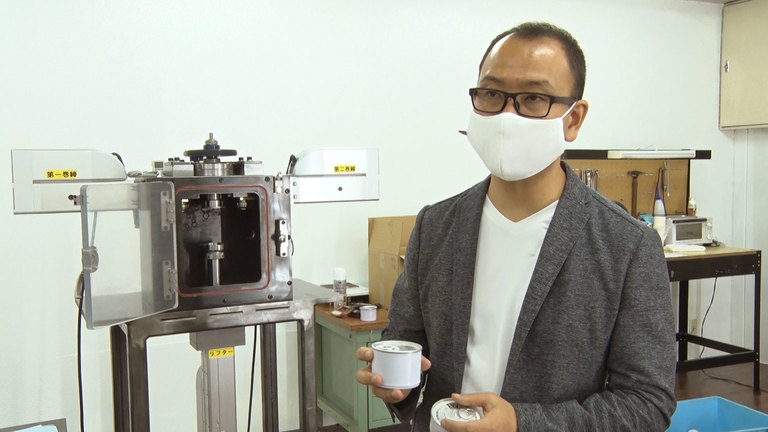
保持當地最大魚或的罐頭品質,以利行銷,當務之急:客製罐頭,選料、調味....Bringing a "Can-Do" Spirit to Specialty Produce: Preserved Food Pioneer
NHK
Follow a pioneering Kyoto-based firm that boosts producers across Japan by canning local specialty foods. Under the motto "bringing a brighter future through canned goods," the business, led by former IT engineer Inoue Kazuma, eschews additives to deliver the natural flavor of primary ingredients. From game and seafood, to premium vegetables and other rare and unique delicacies, this unique business fields 20-30 inquiries a month from producers eager to reach a wider audience.
In Chile, politicians resent the Comptroller General, which audits government officials to prevent corruption. The audits are supposed to be random—but scrutinized officials sometimes complain about unfair targeting. "The auditors have to convince the public they're doing their work honestly," says Alejandro Hevia, a computer scientist at the University of Chile in Santiago. Along with researchers around the world, he is developing technology that could persuade critics that audits are truly random: public random number generators.
On 10 July, Hevia's team will unveil an online random number service. Later in July, the U.S. National Institute of Standards and Technology (NIST) will launch its Randomness Beacon as a permanent service, upgrading a pilot program that began in 2013. Brazil, too, is planning a beacon, by the end of 2019. All aim to improve on commercial random number generators, not only by being free, but by generating the random numbers through transparent protocols and permanently archiving them. The services could benefit everyday applications such as cryptography and lotteries—and also research. Some scientific simulation methods rely on random numbers, and clinicians could use them in drug trials to fairly assign who gets a treatment or placebo.
"We want to put randomness on the internet for people to use in whatever way they can find," says Rene Peralta, a computer scientist at NIST in Gaithersburg, Maryland, who leads the U.S. effort. "I think of it as digital infrastructure."
***2016.5.29
A Million Random Digits THE SEQUEL: with Perfectly Uniform Distribution [Paperback] David Dubowski (Author)
Finally, after 56 years the saga continues! Here is the next book of
random numbers, pseudorandom actually, this time generated purely by
mathematics. The familiar table form continues, but this set has
perfectly uniform distribution. Using the Pi Crust Shuffler algorithm, a
modern PC quietly churned out these 400 pages of delightful digits,
ready for action in the real world. Any math lover would be delighted
to receive this book as a gift! The algorithm's BASIC source code is
included.
These Amazon Products Are No Joke, But the Online Reviews Are
Whether on Books About Random Digits Or Toilet Seats, Everybody's a Comedian
By MICHAEL M. PHILLIPS
What is it about the book "A Million Random Digits With 100,000 Normal Deviates" that brings out the wiseguy in people?
Smart-aleck customers are flexing their
comedy muscles on Amazon, with snarky reviews and silly photos of
products like banana slicers and fresh whole rabbit. WSJ's Michael M.
Phillips reports.
Rand Corp.'s 600-page paperback, which delivers exactly what it promises, sells for $64.60 on Amazon.comAMZN-2.20%
. Yet 400 people have submitted online Amazon reviews, most of them
mocking the 60-year-old reference book for mathematicians, pollsters and
lottery administrators.
"Almost perfect," said one reviewer. "But
with so many terrific random digits, it's a shame they didn't sort
them, to make it easier to find the one you're looking for."
Five stars from this commenter: "[T]he first thing I thought to
myself after reading chapter one was, 'Look out, Harry Potter!' "
Several reviewers complained that while most of the numbers in the
book appeared satisfactorily random, the pages themselves were in
numerical order.
Amazon's online superstore has become
the unlikely stage for 21st-century amateur comedy, where thousands of
customers have submitted reviews for products ranging from the
self-explanatory explanatory book "How to Avoid Huge Ships" to the
Hutzler 571 banana slicer, a yellow plastic banana-shaped device that
cuts bananas into even slices. Rand said its long list of random
numbers, first published in 1955, is one of its all-time best sellers.
"It's a tool of some sort, but it's beyond my clear understanding," a
Rand spokesman admitted. One Amazon reviewer panned a real-life
copycat publication called "A Million Random Digits THE SEQUEL: with
Perfectly Uniform Distribution." "Let's be honest, 4735942 is just a
rehashed version of 64004382, and 32563233 is really nothing more than
97132654 with an accent." "We are always amazed by the creativity of our customers," said an Amazon spokeswoman...
May 16, 2016 - Computer science professor David Zuckerman and graduate student Eshan Chattopadhyay will present research about their method in June at ...
The technical details are described in the academics’ paper “Explicit Two-Source Extractors and Resilient Functions.” The academics’ introduction of resilient functions into their new algorithm built on numerous previous works to arrive at landmark moment in theoretical computer science. Already, one other leading designer of randomness extractors, Xin Li, has built on their work to create sequences of many more random numbers.
See more at: Academics Make Theoretical Breakthrough in Random Number Generation https://wp.me/p3AjUX-uJE
Report Defends 'Thorough Work' In Certifying Boeing 737 Max — But Suggests Changes
Amid difficult questions about the steps taken by Boeing and regulators, the review commissioned by the Department of Transportation largely validated the process that put the jetliner in the air.
A pair of Boeing 737 Max 8 jetliners plummeted from the sky in 2018 and 2019, killing hundreds of passengers and eventually prompting officials to ground the aircraft model worldwide — but the process that allowed the craft in the air in the first place is generally sound, according to a review commissioned by U.S. regulators.
An independent committee established by the Department of Transportation published its findings in a 68-page report Thursday. (Skip down to read the whole report.) And broadly, the group found the certification process laid out by the Federal Aviation Administration to be effective, with some changes needed for improvement.
"What we saw was a thorough work by aviation professionals," one of the two co-chairs, former Air Line Pilots Association President Lee Moak, told journalists on a conference call explaining the findings. Together with retired Air Force Gen. Darren McDew, Moak oversaw a five-member panel with a mix of transportation industry executives and former regulators.
"However," Moak added, "we saw where you could improve the system."
Among their recommendations for the FAA:
Extend the requirement for Safety Management Systems, or formal, structured programs for risk management. The FAA already requires them for airlines and airports, but the committee recommended applying the mandate to "design and manufacturing organizations," too.
Do a better job gathering, analyzing and easing access to aviation data.
Improve collaboration with the FAA's counterparts in other countries.
Reevaluate and bolster the workforce, including "an aggressive recruitment campaign to encourage students to pursue careers at the FAA."
Article continues after sponsor message
What was not among its recommendations was any significant adjustment to the FAA's Organization Designation Authorization, a program by which the agency can delegate elements of its certification process to certain approved private individuals or companies. The program drew controversy last year when lawmakers questioned how Boeing ended up being responsible for reviewing changes to its own design on the 737 Max.
"Safety experts have long raised concerns that the [ODA] program leaves the fox in charge of the henhouse," Sen. Richard Blumenthal, D-Conn., wrote in a letter to the Department of Transportation last March, just days after the FAA grounded the Max.
"In short," he added, "the staff responsible for regulating aircraft safety are answerable to the manufacturers who profit from cutting corners, not the American people who may be put at risk."
Further concern surfaced last week with the revelation that Boeing employees had mocked the FAA in internal messages and gloated about the ease with which the plane was approved. "This airplane," read one note about the craft, which would later be involved in the deaths of 346 people, "is designed by clowns who in turn are supervised by monkeys."
The mother of a victim of the Ethiopian Airlines crash, which killed scores of passengers last year, bears a sign representing the dead passengers before a congressional hearing on the Boeing 737 Max 8 back in June.
Andrew Caballero-Reynolds/AFP via Getty Images
But in its review, the panel found no evidence that the outcome of the certification process would have been different if the FAA had not delegated some of the steps.
"The FAA's delegation system is an appropriate and effective tool for conducting aircraft certification," the committee concluded in the executive summary of its report. "It relies on effective standards, oversight and communication between stakeholders."
The review isn't the first to be compiled since the aircraft was grounded. Last October, an FAA-commissioned panel known as the Joint Authorities Technical Review lambasted both the agency and Boeing for failing to properly evaluate the new automated flight control system that directly caused the crashes.
The Justice Department and Transportation Department's Office of Inspector General also are investigating the Boeing plane's certification.
The airline manufacturing giant — now helmed by CEO David Calhoun after Dennis Muilenburg stepped down from the post last month — responded to Thursday's report with gratitude and a commitment to take its findings seriously.
"We will study these recommendations closely," a company spokesperson said in a brief statement, "as we continue to work with government and industry stakeholders to enhance the certification process."
The FAA also welcomed the report's findings.
"I was pleased to see that the committee recommended we advance the use of Safety Management Systems throughout all sectors of the aviation industry," Administrator Steve Dickson said in a statement released by the FAA.
"The agency will carefully consider the committee's work, along with the recommendations identified in various investigative reports and other analyses, as we take steps to enhance our aircraft certification processes."