「華人戴明學院」是戴明哲學的學習共同體 ,致力於淵博型智識系統的研究、推廣和運用。 The purpose of this blog is to advance the ideas and ideals of W. Edwards Deming.

2010年8月26日 星期四

Reviews of the Leader’s Handbook


Reviews of the Leader’s Handbook

Order the Leader's Handbook now

by Peter R. Scholtes


View more information on the Handbook.

This book is about sensible, no-nonsense ways to lead.

It starts with a bit of history: train wrecks and bad radios: how we got where we are. We evolved into our current management practice and we’ve used it for over 100 years.

The new way described over the next nine chapters. It describes the New Leadership Competencies, Systems Thinking, assuring the smooth flow of work, performance without appraisal, and other lessons for leaders.

Comment by: Quality Management Journal | Quality Digest | Clare Crawford-Mason | Daniel K. Oestreich | Alfie Kohn | Donald J. Wheeler | David P. Langford | Henry Neave | Myron Tribus | Dr. Edward M. Baker | Peter Scholtes


“It is the integration of current ideas that makes this book stand out from others on the topic of leadership”
Quality Management Journal, 1998

“He leads readers from theory to practice with a wide variety of activities and exercises to help leaders immediately begin implementing breakthrough improvements... a witty and understandable format.”
Quality Digest, June, 1998

Author’s comments on The Leader’s Handbook: Making Things Happen, Getting Things Done

It took me a long time to write this book... a process of distillation and percolation, even before I put words on paper. This was the result of a long labor and delivery.

My publisher had asked what my purpose was in writing this book. Here is what I said: I want a book that will make a difference. I want my book to say that simple answers to complex issues will not accomplish anything worthwhile. Behind the complexity is a simplicity that we can come to understand only by struggling. Oliver Wendell Holmes said it eloquently: “I wouldn’t give a fig for the simplicity on this side of complexity; But I would give my life for the simplicity on the other side of complexity.”

I hope this book is more than a management book. Leadership is a universal experience both for the leader and those being led. While much of my book applies to leading a business the insights and learnings apply to educators, healthcare, leaders, government, social groups, religious organizations... anywhere people try to make things happen and get things done together.

I’ve tried to make The Leader’s Handbook fun to read. I write as I speak, with lots of side bars telling various anecdotes. I try to lace it with humor. And I try to feel passionately about what I have to say. For all of this the reader, of course, will be the final judge.

This is what some of my friends have to say about The Leader’s Handbook:


Peter Scholtes has done it again! The Leadership Handbook is the perfect guide for people trying and hoping to accomplish positive change. It's witty, deceptively simple, clear and, most of all, wise and effective. The conclusion with 47 Habits of Pretty Good Leaders should be required reading for everyone of voting age. An excellent and easy to understand primer for continual improvement for the individual and any organization in today's turbulent world.
Clare Crawford-Mason

"The Leadership Handbook is a rare gift for all leaders who want to continue their personal path of learning. Scholtes writes as gracefully as he speaks. His unending supply of insightful models, delightful stories, and practical suggestions for action offers an exceptional bridge to the future. How can you argue with the teachings of a master?"
- Daniel K. Oestreich, co-author
Driving Fear Out of the Workplace and The Courageous Messenger

It is not often one finds top notch theory and practiced in one place, but The Leaders Handbook is a treasury of specific suggestions informed by a wise, humanistic model of how organizations work - and ought to work. Peter Scholtes may actually manage to give consultants a good name
Alfie Kohn

Peter Scholtes’ delightful new book should be required reading for all managers and executives. He goes beyond the anecdotal fluff which is common today and gives us a way to become effective leaders which is based on sound theory and practice.
Donald J. Wheeler, President of Statistical Process Controls
and author of several best selling books on statistical thinking

Peter Scholtes has made another prominent contribution to the complex world of quality improvement. The Leader’s Handbook is a great companion to The Team Handbook and relates, in an uncomplicated, easy to read and understand format, the necessary knowledge and role of a leader in improving organizations. Business, education, and government leaders will all benefit from this handbook. I highly recommend it for anyone serious about leading their organization into the 21st Century
David P. Langford
Co- Author of Orchestrating Learning with Quality

There are more references to Peter Scholtes in my own book on the Deming philosophy that virtually anybody else other than Dr. Deming and Shewhart. He’s great! This comprehensive presentation of Peter’s work over recent years will prove invaluable to everyone who is serious about managing and leading in a much better way.
Henry Neave, Director of Education and Research of the British Deming Assoc.
and Principal Lecturer in Management in the Quality Unit at Nottingham Trent University, Author of The Deming Dimension

When Peter Scholtes talks, I listen. When he writes, I read. If you want to learn about quality, you should do the likewise
Myron Tribus

Finally, in one place, a compendium of the many ideas and methods that Peter has shared with audiences over the years. The Leader’s Handbook is a valuable companion to The Team Handbook and should benefit anyone desiring to improve the performance of their organization.
Dr. Edward M. Baker

Dr. Ed M. Baker


1992. Dr. Deming's Seminar.

Ford: In Recognition of Your Participation in: Dr. Deming's Seminar: "Quality, Productivity, and Competitive Position," October 13-16, 1992, This Certificate is Presented to Glenn Mazur. Signed: Dr. W. Edwards Deming and

Ishikawa Medalists

2007
John Timmerman
2005
Pekka Ala-Pietilä
2004
Elmer (Bud) Gookins, Jr
2003
Donald L. Dewar
2002
Yoshio Kondo
2001
Kenzo Sasaoka
2000
Peter R. Scholtes
1998
Takanori Yoneyama
1997
Irving Bluestone
1996
Joseph W. Dickey
1995
Dr. Edward M. Baker
1994
Paula Brooks Sommer
1994
Horst Schulze
1993
William R. Garwood


Thinking about excellence and benchmarking | Journal for Quality ...

- [ 翻譯此頁 ]
Dr. Ed Baker of Ford Motor Company notes that what often gets copied in benchmarking are only the symptoms of success, instead of the causes of success. ...

2009 Deming Medalist Paul Batalden


Deming Medalists

2009 Paul Batalden
2007 H. Thomas Johnson
2006 Peter R. Scholtes
2004 Shoichiro Toyoda
2003 Lloyd P. Provost
2002 Ronald D. Moen
2001 Henry R. Neave
2000 Thomas W. Nolan
1999 Donald E. Petersen
1998 Thomas J. Boardman Ph.D.
1997 Edward M. Baker
1996 Dr. Gipsie B. Ranney
Metropolitan Section
1995 William J. Latzko
1994 Joyce Nilsson Orsini
1993 Gerald J. Hahn
1992 William W. Scherkenbach
1991 Cuthbert Daniel
1990 George A. Barnard
1989 William A.J. Golomski
1988 George E. Box
1987 David R. Cox
1986 Brian L. Joiner
1985 J. Stuart Hunter
1984 Lloyd S. Nelson
1983 Paul C. Clifford
1982 John W. Tukey
1981 Hugo S. Hamacher
1980 John C. Mandell
1979 W. Edwards Deming

The Brumbaugh Award Winners
Crosby Medalists
Deming Medalists
Distinguished Service Medalists
Edwards Medalists
Feigenbaum Medalists
Freund-Marquardt Medalists
E.L. Grant Medalists
Honorary Members
Ishikawa Medalists
Juran Medalists
E. Jack Lancaster Medalists
Lifetime Achievement Award
Shainin Medalists
Shewhart Medalists


US system may be next for health innovator

President to tap Harvard professor

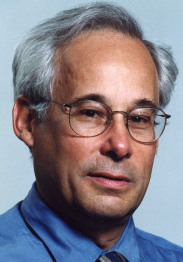
Donald BerwickDonald Berwick
By Kay Lazar
Globe Staff / March 31, 2010

Governments around the world have long sought Donald Berwick’s expertise to help solve stubborn health care problems — from hospital-acquired infections to medication errors.

The 63-year-old pediatrician and Harvard Medical School professor, once considered a rebel for his unconventional ideas about boosting quality care at less cost, is now facing a more daunting challenge:

Berwick is President Obama’s choice to run the nation’s largest health system, the Centers for Medicare and Medicaid Services. The agency and the nation’s health care system are about to undergo dramatic changes, and the Obama administration is under intense pressure to control costs. A White House spokesman confirmed the nomination, expected to be official soon.

Under the sweeping health overhaul Congress approved, Medicare will be scaled back more than $400 billion over 10 years, while Medicaid, a joint state and federally funded program, will extend health coverage to millions more poor people — its largest expansion ever.

The agency is one of the government’s largest, with 4,500 employees and an annual budget of $780 billion. It serves almost 102 million elderly, low-income, and disabled Americans.

Berwick has never run anything larger than his 110-employee Cambridge consulting firm and think tank and has never worked in Washington. But people who know him say he has the intellect and judgment to run the agency, which touches the lives of one in three Americans.

That is not to say his confirmation by the bitterly divided Senate will come easily. Berwick can expect to be pressed on how he will carry out the new law. Sparring over the controversial legislation, and how it will be implemented, may well be part of the proceedings.

Berwick has declined to be interviewed until his appointment is formally announced. But those who know him predict the respect he has earned in health care circles will help him survive the confirmation process.

“He has longstanding recognition for expertise and for not being a partisan individual, so I think that will assist him in his dealings with the Congress, both with the majority and hopefully the minority, as well,’’ said Gail Wilensky, an economist who ran Medicare and Medicaid from 1990 to 1992, during the first Bush administration. Since then, she has worked with Berwick on a number of health initiatives.

Bridging disparate personalities, politics, and egos is a strength of Berwick’s, say some who have watched his rise to guru-like status in the health care industry.

Dr. Paul Batalden, a Dartmouth Medical School professor and pediatrician who, with Berwick, cofounded the Cambridge-based Institute for Healthcare Improvement in 1991, puts it this way: “He has wonderful ideas, and he is able to help others see what those ideas mean in their daily lives.’’

Batalden recalled a meeting 10 years ago in the Pittsburgh headquarters of Alcoa, the once-wheezing steel manufacturer resuscitated when Paul O’Neill came aboard as chief executive. Berwick brought in a group of hospital CEOs to help them learn some of O’Neill’s secrets, and that’s when the Alcoa chief challenged the hospital executives to eliminate one of health care’s most frustrating problems: hospital-acquired infections.

“Everybody in the room tried to correct him and say that’s unrealistic, it can’t be done,’’ Batalden said. “But Don took that idea and made that happen in several hospitals in this country, because he helped people see it was possible.’’

Health care leaders from all over the globe have tapped Berwick’s nonprofit institute for guidance. President Clinton asked him to serve on an advisory commission on consumer protection and health care quality in the 1990s. Berwick’s resume also includes more than a passing brush with royalty: For his help in revamping Britain’s health care system, in 2005 he was made an honorary knight, the highest award given by the United Kingdom to noncitizens.

Berwick, a New York native and eldest son of a family doctor, is a pediatrician by training but a health policy specialist by passion. He earned a master’s degree in public policy at Harvard’s Kennedy School of Government in 1972, the same year he graduated from Harvard Medical School.

The transformation from physician to quality-of-care maestro started a decade later, when Berwick, then a pediatrician at Harvard Community Health Plan, was tapped for a new position aimed at measuring quality in the health organization. By 1985, Berwick was traveling around the country, meeting with leaders of other industries that had boosted their performance by revamping operations.

Lessons learned at places like Sheraton and Bell Labs became the seeds for Berwick’s institute. Over the years, the institute has launched campaigns that essentially guide hospitals in myriad ways to improve patient care, often by revamping internal communication systems.

Questions have been raised about some of the successes his institute cites, however. In 2006, two researchers published an article questioning results of the institute’s 100,000 Lives Campaign, which said it had averted about 122,000 hospital deaths, largely by preventing medication errors and infections in 3,100 institutions over 18 months.

The researchers said 14 percent of the hospitals did not submit their data, and that all of the data submitted were unaudited.

Also that year, Modern Healthcare, a respected journal, questioned the accounting of various funds at the institute. It also noted that in 2003, Berwick earned a “whopping $769,000 in total compensation, followed by $639,000 the next year, including $110,000 for lifetime health insurance.’’ The organization’s tax filings for fiscal 2008 show Berwick was paid $637,000.

Still, Berwick gets credit for the institute’s hard work.

“They involve hospital administrators, doctors, trustees, and nurses because they understand that you don’t get better unless everybody’s involved,’’ said Paul Levy, chief executive of Beth Israel Deaconess Medical Center, who hired the institute in 2002 to bolster patient care. “In the early days, he was not always well received by the medical profession, but he has been persistent and stuck with it and now is more likely to be paid attention to.’’


網誌存檔